— Focusing on Murder on the Orient Express and And Then There Were None
“The Orient Express is no longer just a train on the snowy tracks; it has become a way of navigating the online world.”
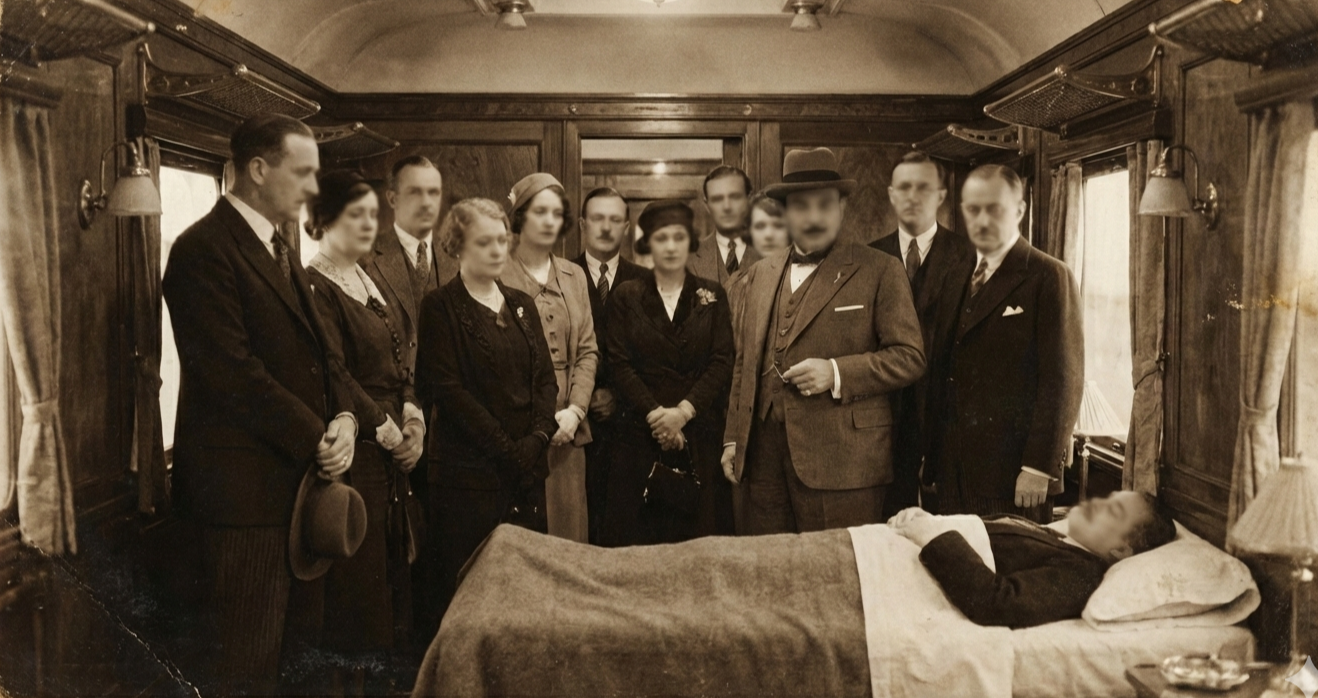
When Murder on the Orient Expresswas first published, the premise of a collective conspiracy to bypass the law seemed like an extreme work of fiction. Today, however, this structure feels eerily familiar.
※ Note: This article contains major spoilers for 'Murder on the Orient Express' and 'And Then There Were None'
1. Collective Judgment and the Vacuum of Responsibility
In the novel, twelve people each strike a blow with a dagger. There is no single "decisive" killer; as a result, responsibility is completely diffused.
This structure closely mirrors how public opinion is formed today. Many participate in passing judgment, but few take ultimate responsibility for the outcome. While collective judgment often feels "safer" than an individual one, that sense of security is maintained only when responsibility remains a void.
2. Anonymity and Consensus
The judgment on the Orient Express is sustained through silence and mutual trust. Today’s digital platforms provide similar conditions through anonymity and physical distance. Consensus is formed faster than contemplation, and judgment is completed long before a thorough review of the facts. In such an environment, justice is often accepted as "truth" not because of rigorous reasoning, but simply because the same emotion has coalesced into a crowd. We may be living in an era where emotions disguised as consensus are more easily accepted as justice than individual deliberation.
3. The Choice of Silence
The decision to remain silent, even while knowing the truth, plays a pivotal role in Murder on the Orient Express. In this context, silence is not neutrality; it is a deliberate act that sustains the judgment already rendered.
At what point did Hercule Poirot, even without holding a dagger, become a participant in this judgment? And are there truly only twelve killers? Can those who knew the truth and chose silence be absolved of guilt? Or perhaps, within the confines of the Orient Express, the very definition of "criminal" has been irrevocably overturned.
The question posed by the Orient Express remains valid today.
The diffusion of responsibility and collective consensus have crossed the boundaries of time. The 'Orient Express' has never stopped running; only its stage has changed.
Next in the Series: Part 3. Judgment Beyond the Many
“In an era where judgment has become effortless, can we choose not to judge?”
References
‧Diffusion of Responsibility:
A psychological phenomenon where individuals are less likely to take action or feel a sense of duty when others are present, as the burden of responsibility is spread across the group.
‧Vigilante Justice:
The act of taking the law into one's own hands to punish a perceived wrongdoer outside of the formal legal system.
‧"In the end, we will remember not the words of our enemies, but the silence of our friends."— Martin Luther King Jr.
- A reminder that the greatest tragedy is not the overt violence of the wicked, but the appalling silence of the good.
‧The Banality of Evil:
"The sad truth is that most evil is done by people who never make up their minds to be good or evil."— Hannah Arendt
- A concept introduced by Hannah Arendt, suggesting that great evils can be committed by ordinary people who blindly follow orders or conform to the status quo without moral reflection.
‧"All that is necessary for the triumph of evil is for good men to do nothing."— Attributed to Edmund Burke.
-Highlighting that inaction and silence are the primary catalysts for injustice.
'Beyond the thought: Rewriting' 카테고리의 다른 글
| 풍경 속 '낡은 의자'와 '너럭바위': 텅빈 본질과 영원한 실존 사이에서 (0) | 2025.12.26 |
|---|---|
| [Series Part 3] Agatha Christie’s Masterpieces: Judgment Beyond the Many (0) | 2025.12.19 |
| [Series Part 1] Agatha Christie’s Masterpieces: Judges Above the Law (0) | 2025.12.19 |
| [The Omnibus Edition] Agatha Christie: The Architect of Judgment and the Portrait of Modernity (0) | 2025.12.19 |
| 【シリーズ第3回】アガサ・クリスティの作品:多数の後の審判 (0) | 2025.12.19 |